I’m happy to announce the publication of my final book, Straw Shoes, released June 9th, 2026.
Betty Lee Sung inspired me to write my book. I met with her between 1969 and 1972. I was working on a Title 111 federal project, a racial-ethnic one, writing curricula for schools. I met with her in person and read her book, Mountain of Gold. She was a librarian then, but went on for her doctorate and became famous as a leader in Asian studies in NYC. She passed away only a few years ago, in 2023, after leaving her mark on history.
I wrote the first draft of Straw Shoes not long after my conversations with Betty, but then set it aside for many years. I dusted it off a year ago, and set to work on it with my editor. The story is now better than ever for the wait. For years now, I have said “this book is my last,” but now I think it is finally true. A good note on which to end a lifetime of writing.
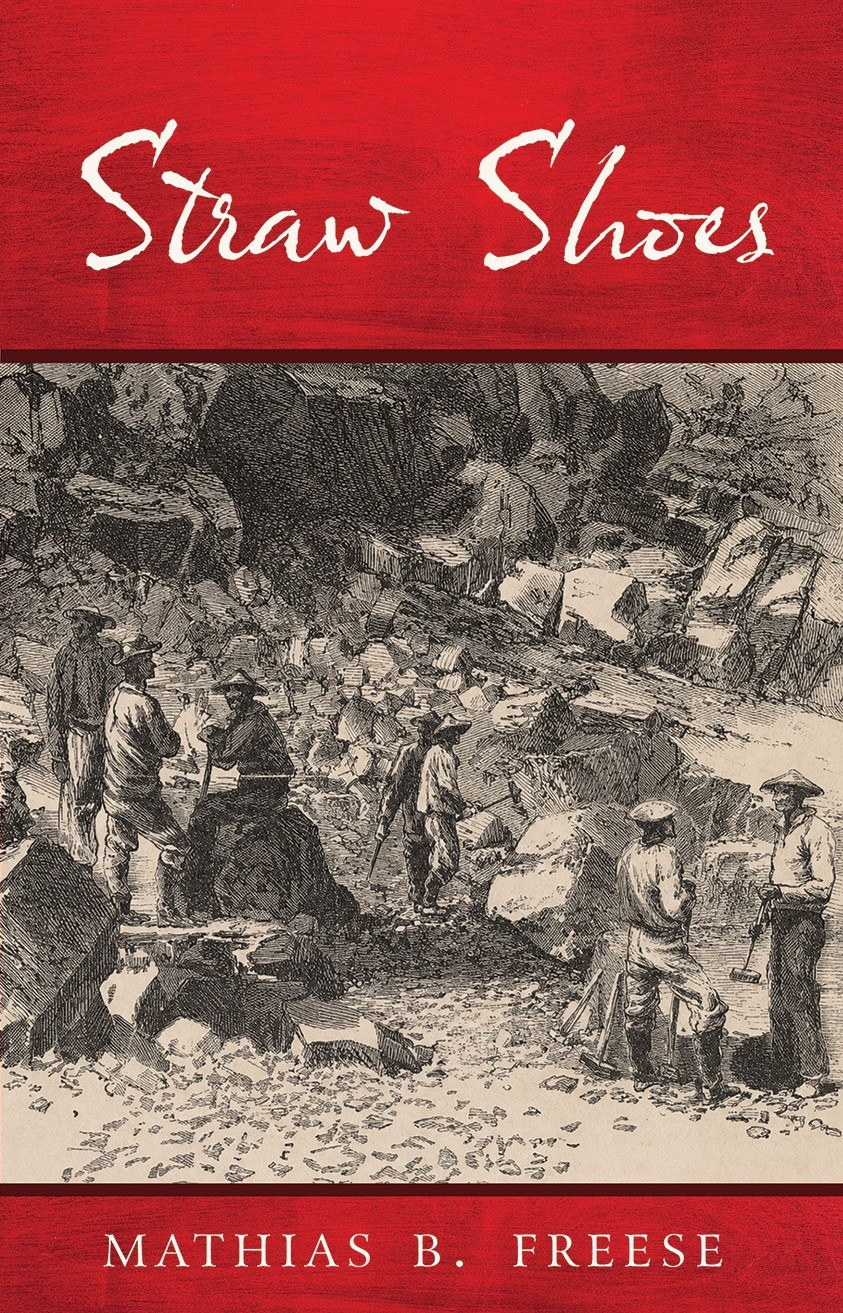
In Straw Shoes, Mathias B. Freese tells the story of Ah Ling, a 19th-century Chinese farmer who gambles with Fate and leaves his fields for the brutal promise of Gold Rush–era San Francisco. He trades yielding soil for unyielding granite—farming rock instead of rice, survival instead of certainty.
But this is more than a tale of immigration and hardship. It is a meditation on duality: soil and stone, anchor and ascent, softness and strength. As the Tao Te Ching teaches, the weak may overcome the strong; the humble earth may outlast defiant rock. Restless and yearning for completion, Ah learns instead that life is accretion—laying track piece by piece, being rather than becoming.
Rich with Freese’s signature dialogues, mentor pairings, and metaphysical turns, Straw Shoes speaks in a voice both youthful and ancient. Written across decades—by the man Freese was and the elder he became—this final work resonates with hard-won wisdom. The farmer who hews cliffs mirrors the author who has weathered time: softer in insight, harder in truth.
Spare, symbolic, and deeply human, Straw Shoes is a powerful farewell from a singular literary voice—one that still speaks, long after the last page.
Leave a Reply