Excerpts from a beautiful review by Rose Auburn
5 Stars!
Freese originally wrote Straw Shoes in his early 30s. Some fifty years later, he revisited it, a much older man with five decades of lived experience effectively co-authoring with his younger self. Freese seamlessly blends youthful energy with elderly wisdom. This fascinating cross-era collaboration has not only brought a spellbinding story to light but also added profound nuance to the narrative.
Indeed, dualities, dichotomies, and pairings in all their figurative and literal guises permeate Straw Shoes. The novel opens with Ah Ling walking in his fields, a sense of philosophical disquiet nagging him. Freese writes with sublime simplicity. His words have a poised, exquisite quality that feels timeless, and he magically plays to the reader’s senses.
The first part of the novel appears gently suffused with straw-colored light and soft earthiness. It’s a painterly portrayal of the landscape, lending the captivating impression of being half-dreamed while evoking the historical atmosphere and cultural mores of 19th-century China with compelling ease.
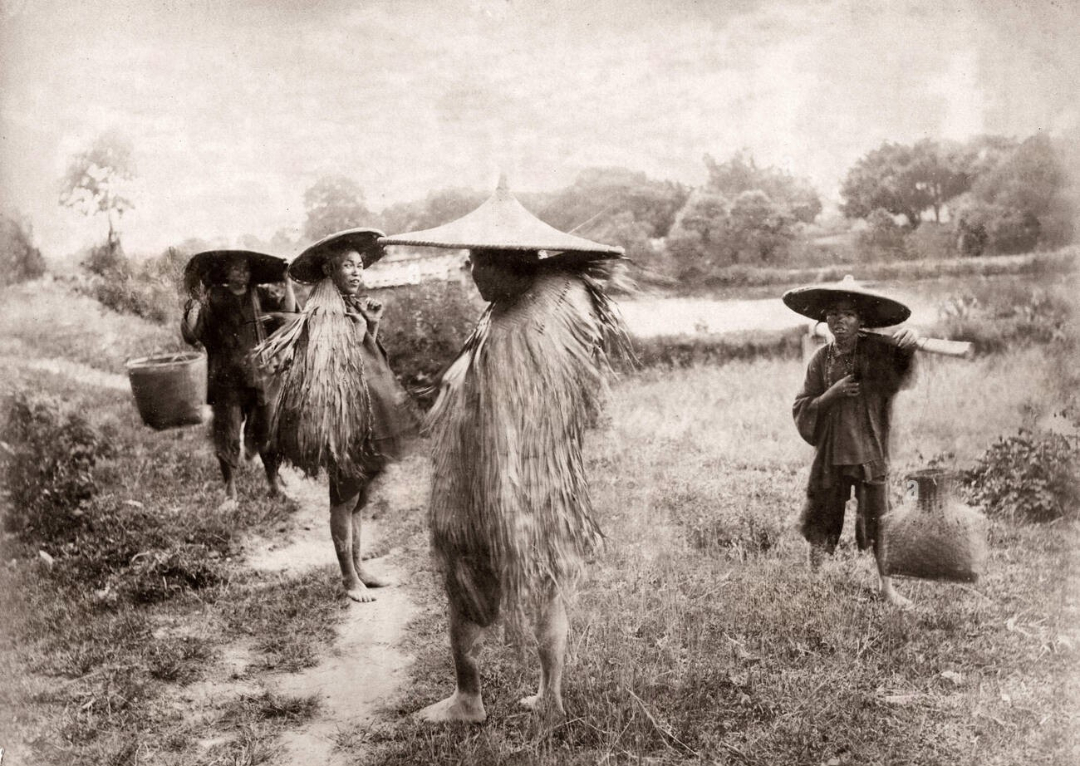
Ah Ling is a complex, searching, and persistently self-reckoning character. Freese renders him with single-minded honesty, and although Ah Ling’s decision to leave his family could, in a lesser writer’s hands, seem self-indulgent, it does not.
Rich in symbolism and metaphor throughout, with a veneer of Eastern spirituality and a sprinkling of leitmotifs, the narrative is crafted with impeccable skill and a deceptively light touch, as it begins to take on allegorical proportions.
Nonetheless, Straw Shoes can be read on a purely surface level as an intriguing tale of one man taking an enormous gamble, and Freese controls plot and pace superbly. It’s a riveting story, entirely free from pretension or pomposity and effortlessly absorbing to read.
Overall, Straw Shoes unfolds through Ah Ling’s third-person perspective, although Freese occasionally lets the reader glimpse other characters’ aspects. It’s an omniscient view rather than a close one, and in places, a knowing, slightly arch tone softly punctures the narrative, as if to remind the reader of Fate’s role in Ah Ling’s journey. This role is ultimately fulfilled with pathos and a cinematic rush of violence.
Among the multiple tiers of meaning contained within the novel, its title possibly has the most powerful connotations, a moniker whose interpretations deftly and poignantly evolve as the novel progresses.
Flawlessly edited, Straw Shoes is a hauntingly beautiful little novel written with mesmerizing clarity. Brilliantly wrought, finely calibrated, and gossamer-layered, Freese’s decision to finalize and publish this novel was a shining one, securing its place in the Freese canon as, quite possibly, its magnum opus.
Leave a Reply