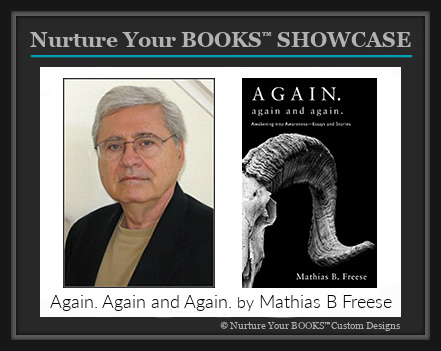
Pastiche and that Mormon Thing

Since my last blog I’ve been preoccupied with editing This Mobius Strip of Ifs, which is a mixture of essays and memoirs on education, Existentialism, writing, family, movies, death, living, separation, attachment and psychological abandonment as  well as societal conditioning. Whew! After pretty well “scrubbing” the text, Jane and I still found about 50 corrections to make, some requiring re-phrasing, others making the text more felicitous. All tedious and necessary. It is a sturdy book; if better than that, I leave it to reviewers. I have sent out a copy to a contest as well as other work as well. I am a believer in contests, all so Darwinian. Concomitant with all this, I’ve made lists of literary bloggers and have posted queries to about 150 sites and I expect to get a small sampling back. You just have to keep scouring directories, Yahoo, New Pages, etc for sites that suit your genre, in this case memoir/essay. Although not a joiner, I did sign up at bookblogs.ning.com which deals with all kinds of variations, including non-fiction work.

While all this is going on my next book is at the starting gate, “I Truly Lament,” a collection of short stories on various aspects of the Holocaust, a follow up to The i Tetralogy.” It has been edited very well, quite spiffy, and except for a few final touches it will go out to a major contest within a week or so as a word document or PDF, as some reviewers are willing to do that — the writing world is changing as I write. I will coddle this book, hopefully acquiring a publisher rather than self-publishing. It has stainless steel balls, for 10 stories have been published in 2010-2011 from the collection. As usual I go out on the limb in this book.

I lurch daily from editing, seeking out bloggers for possible reviews, making lists of potential things to do to push the book, worrying about deadlines for this and that and squeaking in here and there a book to read, which in this case is American Massacre by Sally Denton, the sordid tale of the Mountain Meadows Massacre committed by the theocratic state of the Mormons. Let me be clear here: it was the most significant atrocity ever committed on American soil until the bombing by Mcvey in Oklahoma. I have read at least three able books about the Mormons, one on the massacre itself and it wasn’t until I read Denton’s work that I got a more complete understanding of what had happened. A previous blog on Fanny Stenhouse will bring  you up up to date, for I’d rather give my emotional response to what I read without giving all the details — that is your task if interested.

Observations: Brigham Young was a crypto-fascist, wrong word to use, but in all aspects he was; he did not collude in the massacre of an emigrant wagon train of settlers from Arkansas. He was directly responsible as much as Hitler was responsible for Dachau. One does not have to turn on the gas to be responsible for the act. The Mormon “church,” if that is what it is, has spent over a century in a cover up, in one fashion or another for the killing of at least 140 men and women, the rape of one girl if not two by R. D. Lee, the enrapt and obeisant follower of Young. What I am about to say is the crux of it all. The mental conditioning, the cult-like behavior within the church’s own doctrines and the theocracy which ruled Utah  was so despotic and corrosively and psychologically invasive of its people it led to the classic “in” group versus the “out” group, in this case Mormons versus the Federal government. When you read about this group you sense that it is like reading about Jim Jones, except in this instance, the Mormons externalized their rage and fears on an innocent group. I conclude it is a church of followers; consequently I doubt in the forseeable future any great art emanating from this insular group.

I am at the point when I was first learned about the Holocaust — appalled, enraged, furious, angered, hateful, disgusted, seeking some punishment for the perpetrators. Until very recently the Mormons stonewalled any efforts to reveal the total truth, these so-called people of the book. The worst hypocrites are religious people, for they are ruled and dominated by a doctrine and they are in no way free of their conditioning. They revel in their blindness. When unearthing fragments of bones, skulls, and the like, archaeologists were pressured by the Mormon church to cease and desist, an old tradition in that church; the scientists were furious and rightfully so, for their preliminary results pointed directly at white men and not Indians responsible for the killing. In short, historically the church has taken miniscule steps to allow true inquiry into its role in that massacre. And historically, like all good white men of the day, they blamed the local Indians for the deed, although in fact Mormon men dressed and painted up as the Indians controlled and carried out the act, and that act was deliberately carried out through a chain of command going back directly to Brigham Young who used what we would today call, “plausible deniability.” Corrupt, venal, cut-throat, base, coarse, rude and vulgar, he wrapped himself in the relgious cloak of infallibility and let his henchmen take the rap. Years later after two trials only one man, R.D. Lee, was executed. By the way, the U. S. government did collude in not pursuing the case for all kinds of political reasons. A few very honorable human beings did protest, crypto-Schindlers. Ah, the repetition compulsion of the human race.

Like the Nazis, who collected the luggage, shoes, hair and gold teeth from their victims at the extermination camps, after the massacre wagons were loaded up with the dresses of the slain women, their earrings, personal items, their shoes, undergarments, and the clothing of the men as well as the stock they had driven from Arkansas, their wagons — the bodies were left stripped and nude and observers saw wolves feasting on their carcasses for weeks after.  In short, all the paraphernalia was collected and driven back to Salt Lake City in wagons where women were employed to wash out the blood from the garments, press and iron them.  I associated to how the Germans cleansed human hair and  wove them  into blankets for their troops on the eastern front. The few very young children who were eight or younger were allowed to live because of some decrepit Mormon doctrine and often assigned to the homes of the very slayers of their parents!The personal trauma was astounding, haunting them for the rest of their lives and their descendants as well. In one grotesque and horrific incident, R. D. Lee heard his young “adopted” girl see his wife and say that it was the dress her mother had and so were the earrings; with that Lee got up and cut her throat. So she was psychologically killed once and now he killed her forever. I give you one of the high officers of the church.

Denton writes in a measured voice, for she is an investigative journalist; it all sneaked up on me, the culminatively arraying of facts so that conclusions are more powerful because they are not driven home. I’m at that point that I am ready to debate any Mormon I find in Nevada about the hideousness of his past, for I do believe that we all have to metabolize our personal and collective pasts if we are to move ahead in some way toward a better life or existence. The Mormons, I believe, are a frozen collective, and in many aspects are a cult much like Scientology. It is brain control of a significant kind. Jane is not a “Jack Mormon,” which according to a definition is a Mormon who does not follow the church but has a measure of devotion to it. Jane is an apostate, thank ”god,”a tried and blue atheist and she sees through her Mormon upbringing with a laser eye. I will only say, perennial shrink that I am, here and there, like a stone on the road I catch Jane’s conditioning , which I point out to her. It often takes the shape of obeisance. And sometimes with love and sometimes with anger, I go after that, for I detest enslavement of any kind, especially mind conrol from a church.

Only recently Jane received a call from a Mormon elder asking if she was interested in…You can fill it in. Jane thought about it and said no. She informedme that they never let go, or stop trying. In any case I think to test her mettle she thought it might be very interesting if she invited the elder back to discuss her reentry into the church. I questioned her about her motives, but she wanted this and saw through to herself. In any case two men arrived, one older than the other, dressed in black, and I was informed by Jane they come in twos. After two hours with them, I returned home because she had requested I leave, knowing that I would have gone at them fast and furious about other things. What had happened? The same old crap, but this time she argued evolution and gave them her considerable knowledge about this and that and as she told me this her eyes rolled up because it was all so useless. I could have saved her the time. When you are a zombie, aspirin doesn’t help and sweet reason does not stay the hand at the oven’s door. A few days letter a note on yellow foolscap, folded in four, was at my doorstep, addressed to Sister Holt, her maiden name, asking her if she would like to attend the next church meeting, etc. Note that Jane tells the story while in a temple in Utah she asked one of the tour guides what was her first name as they were addressing one another as sister. Jane was told this was natural and normal; however, when asked what was the first name of her companion guide, she could not(!) give it because she did not know it. I give you a slave.

Probably the most hated, the most loathed symbol to a Mormon is the question mark.

Dear Mr. Brooks

David Brooks is a columnist for the New York Times.I answered his request in his column, “The Life Report.” I am quoting from his opening remarks.

“If you are over 70, I’d like to ask for a gift. I’d like you to write a brief report on your life so far, an evaluation of what you did well, of what you did not so well and what you learned along the way. You can write this as a brief essay or divide your life into categories — career, family, faith, community, and self-knowledge –and give yourself a grade in each area.

” If you send these life reports to me at dabrooks@nytimes.com, I’ll write a few columns about them around Thanksgiving and post as many essays as possible online.

“I ask for this gift for two reasons.

“First, we have few formal moments of self-appraisal in our culture. Occasionally, on a big birthday people will take a step back and try to form a complete pciture of their lives, but we have no regular rite of passage prompting them to do so.

“More important, these essays will be useful to the young. Young people are educated in many ways, but they are given relativelty little help in undersanding how a life devbelops, how careers and familes ev olve, what are are the common mistakes and the common blessings of modern adulthood. These essays will help them benefit from your experience.”

Dear Mr. Brooks:

I was a teacher for thirty-two years.It was the equivalent of having urine running down your leg. In this culture teaching, as presently constituted, is a significant agent of conditioning the young, making them dupes for the American dream, whatever that is. If you don’t know, it is marketing.

Since the Conant Report in 1957 about our secondary school system reported on its gross deficiencies, some decades later nothing really has significantly changed.

Was I a good teacher, which is sufficient in any case, or just a cranky discontent? I was one of the best. I lived a devastating split. It took the awakening of intelligence; Krishnamurti called it that, for me to realize that I was like Dathan on the way to Mt. Sinai, hectoring Moses to return to Egypt. No wonder it took forty years for that generation to die out so that metaphorically an unenslaved Jewish mentality could enter Canaan.

I trained to be a psychotherapist, so that I could come to my death knowing that I could be something other than an American teacher. It is not the occupation that is dreadful; it is the reality of it. So I wasted a third of my life a surly discontent in a mind-numbing occupation where to be excellent threatened the lives of others.I once told a group of parents that I was a writer who happened to be a teacher and because of that I could help their children in ways that an English teacher could not. On the morrow a guidance counselor tried to reprimand me for that “provocative” statement, for the tax-paying parents wanted me to be a teacher who happened to be a writer.

I have always been subversive, often surreptitiously. Call it passive-aggressive if the diagnosis helps you.And what a split that is. Allow me to brag: I see through crap, I see through large swaths of this rather decadent culture –just look at the array of pinheads running as Republicans. The fact that, except for one, they all believe in creationism attests to the failure of the school system in this country. Nothing wrong in being in decline, a natural historical process for empires. Just see it.

As a therapist I grew immeasurably so. I worked with clients to decondition themselves and finally to be free of me. I don’t brew disciples. Working with a school-phobic teenager, the school pressured the mother because they had not seen any results. They told her I was not a good therapist. Get this – school teachers commenting with their amazing erudition and expertise about another professional in an entirely different career. Aside: if more teachers went into treatment before becoming “educators,” we would see better teaching. Better still, if they went into treatment they might realize teaching is not the way to behave maturely

In short, I urged the mother to stand fast. I told her I was not an agent of the school system. It was not my task to make her son be good, nice, conform and all the delightful ways that schools want the herd to behave. Years later I met the now adult man who was my client. He was at college and all was well. He won. The school was defeated. Yippee!

All my life I have written. It kept me emotionally alive all during those dread years as a teacher. I have written three books, all favorably reviewed, not bad for someone in the last decades of his life. I will never play golf!

All this is career information, is it not? But there is more to every one of us. I have been reading and learning from that great spiritual genius, Krishnamurti, for more than three decades. Between him and Kazantzakis I almost have it down. The Freese motto is an epitaph from Kazantzakis’s: “I hope for nothing. I fear nothing. I am free.” I am not dependent on either man. I just catch their rays for a good mental tan.

Teacher, shrink, writer, and all this does not assuage the griefs I have experienced in my life. A daughter who committed suicide because I was an inept and often not understanding father who lived far away. Closure is a moronic American cliché. It never closes. I don’t bathe in retrospective guilt. I just have regrets I did not see more deeply as a father into her pain. I lost a wife in a car accident and a daughter who was terribly mangled but survived, her boyfriend dying in the crash. I remember all this and I can do no more than to be a living sconce for each, for if I remember them they are “alive.”

This society considers me superannuated.In response, I just don’t consider this society. Krishnamurti said that all societies are essentially corrupt. I would tell anyone reading this essay that is all an aware human being needs to know. The rest is his or her struggle.

Superannuated, My Ass

According to my dictionary, it is to be obsolete, old-fashioned or outdated. None of this applies to me and yet it does. Because this particular culture says so. This culture has an implicit statement to make about age and purpose. There are manifest and subtle latent cut-offs for people. In fact we have perfected retirement in its various manifestations. Careers are made for those creating pensions and benefits; retirement homes are an extraordinary business. You can fill in the rest. At a certain age you automatically become old or of “retirement age.” The whole construct of retirement is a product of a capitalistic system. We do not value the wise, the accrued smarts of those older than ourselves. Americans generally dwell in the new, the temporary, riding the crest of the wave; the association comes to mind of a surfer connecting to his Ipad while on his board. We adore the temporary, the facile, the evanescent. All this is the seemingly banal complaint or observation by the old of the young.

What do the superannuated do or feel when they realize they have reached the age of superfluousness. Many engage retirement all that more, digging deeper into their golf game or doing line dancing (argh!) at the local gym, or taking courses as hamburger helper for their minds as they speed toward death and dying. No superannuated person considers occupying Aetna’s offices, especially the benefits office. Admittedly, to face what this culture mandates in a thousand subtle ways, like licking the bronze shoe of a sculpture in Rome, the infinite licking producing a centuries old patina, is to realize that resistance is futile — the Borg have won. Awareness, personal self-awareness, is a rare commodity in all populations throughout the world. To be awake is not a good thing for one who is “over the hill.” It is not even a good thing for one who is young.  Imagine America as an immense human head with a Trump combover, silly, vain, unreal, narcissistic and completely out of touch with some commonly held verities throughout human history, oh, such as integrity.

The only movie that I can recall over all these decades that sent out a disturbing message about the conditioned and unconditioned was “The Matrix.” I read it for what it was. A metaphor for the aware and unaware, one world induced a living coma in life, while the other fought off the narcolepsy, the hypnotic trance the so-called “real” world was in. I argue that all the nonsense sent to us by satellites and cable are pollution, for they create and have created a kind of blade runner world. I wonder, at moments, if there are any  young adults who see through all this dangerous cant; and if they do, are they suicidal? If you have not learned who you are by your young adulthood, this world will indoctrinate you so well that you can watch a child being raped and not intervene. Oh, no, I don’t mean call the cops — that comes later. I mean actually intervene. In this case 911 is the second choice. May McQueary never find solace in his “God.”

A few months ago, coming home one night my wife and I watched a neighbor who we only had a few interactions with, a mother, in this case, approach her son who was seated on the lawn with his buddies. Then, she slapped him heartily about the head for some misdeed only known to her. Standing next to her was another neighbor who was “involved” with his cellphone and acted as if he had heard nothing, which he definitely did, because I shouted to the mother to stop what she was doing. I tore into her verbally. At first she thought I was kidding her. I told her if she continued I would call child protective services. With that she took her child and left. So I had an aberrant mother and an  uninvolved cop who heard nothing. Yes, a cop! Yes, he denied he heard anything although the event occurred on his lawn no more than four steps away from him. When the next cattle car chugs across the landscape to Auschwitz, he will hear nothing as well.

I feel very superannuated in this world, for my values are considered outre or retro. I feel they have been tested by my decades of living. I have lived from hearing Superman on radio to having a woman sell me a pound of coffee at a farmer’s market the other day and use her smartphone to connect to my bank, after I used the tip of my finger to sign my name on the glass screen as well as forward a receipt to my computer. I am the same man, the same continuing person all these decades. You can mix me up, scramble me like three eggs on a griddle, and I will still be me. You would think this might be appreciated. No. It is not. The scary thing is that we are all so enmeshed in anomie that the only validation we have is the validation we may give to ourselves (many are unaware of that personal attribute)– and that is a centuries old verity, believe me.

Superannuated as I am, I dwell in the somewhat smug and self-satisfied notion that I own something you don’t have and it is worth millions. However, i see that you have a somewhat smug and self-satisfied notion that my time is over and you are declared the winner. I had a good run. And as Harlan Ellison once ended one of his short stories, “Fuck you!”

Tell It All The Tyranny of Mormonism, Mrs. T.B.H. Stenhouse

Recently I read Fawn Brodie’s biography of the charismatic charlatan and all around creep, Joseph Smith, founder of the cult religion, Mormonism. The book came out in the early seventies and is a bit stodgy; however, it is backed up with solid historical matter, for Brodie was a historian of some note, a Pulitzer Prize winner. Jane who is an apostate Mormon (which means she is psychologically free), to use their jargon, cued me into the book. What I came away with are some generalization about Smith and the abominations he created from his so-called “revelations.” As an atheist I just wagged my head continually as I read about this mouse that roared across America. As Brodie says somewhere, these early religions in America were mostly a combination of piety and avarice (Anabaptists, Methodists, Shakers, et al). Associate to Elmer Gantry.

Materialism runs rampant throughout Smith’s life, the attaining of riches, the grifter seeking ways to accumulate riches, telling others that his dicta was “divinely” inspired. It continues with Brigham Young, a cretinous, vicious man who increasingly foisted polygamy upon Mormon women for his own sexual needs, and for the sexual needs of Mormon men basted in a sauce of religiosity, all man-made, of course, to serve their purposes. I define Mormonism as a man-made religion (aren’t they all?) that is rooted in misogyny and materialism. Some caustic Catholic wit of the Renaissance said that English Protestantism came from the testicles of Henry VIII. Mormonism flowed from the demented, self-acquisitive mind of a delusional grifter who composed a hodge-podge of Old and New testaments, Egyptian hieroglyphics, racism, into a potpourri of self-justifications we now call the Book of Mormon, or as Twain said about its prose and content, “Chloroform in print.” The only other book so made up of babble is the Koran.

Reading Brodie’s book I was appalled as each self-serving idea that Smith came upon or thought of was then justified or rationalized by a concomitant “revelation” to support it. Smith would later on walk about with scribes as if anything that emerged from his mind to his lips was holy writ. Often he would go into a room and compose his revelation and return to his congregation with this newly minted canon. Charlatan supreme! Remarkable to read about. After years he had pages rife with all kinds of revelations, so many, I imagine, in contradiction to others; so he made up his junk theology as he went along. At one time he had a seer stone that he “consulted” privately and which supposedly he could get divine inspiration or revelation for after all, he was a “prophet.” What is appalling, what is achingly mysterious, what is frightening is the immense gullibility of his followers. I could argue that about Christianity — Magi, Star of Bethelem, ascension and resurrection, the raising of Lazarus, many rooted in Greek myths, Apollo, to wit. For edification and support for my contentions see Homer Smith’s Man and His Gods, with an introduction by Albert Einstein.

The blackest deed of all with respect to Joseph Smith was to foist his inner delusions as conscious theology, grounded in his gamboling narcissism, upon abject believers, many of whom, seemed feral in their worldview. Others knew he was corrupt; others did not want to believe so. The whole fabricated story of golden plates, how he constructed a box to contain them, and how he very often refused even his closest friends or followers to see his seer stone, and his “visions” et al strains one’s idea of rationality. C’mon, fo/ks, he came from upstate New York and was one of the locals! His early life was as a scam artist ( all of his family had visions as well) and a he grew to learn that the greatest scam game of all was religion and how improving upon this street alley shell game, he realized as the years went along that he had a very good thing going here. We all have our Pauls, the fabricator of Christianity. Rather, Smith was an imposter, and the DSM III, used by psychologists, psychiatrists and social workers lists this as a character disorder. He was more than a narcissist. There is not a religious leader alive, in my opinion, who is not in some aspect paranoid. After all, they speak for god, tell us what god would feel about social issues and so on. The megalomania is manifest. If you hear voices, if god speaks to you, if you listen to a burning bush, that is there, I contend.  There is a body of psychological  thought that maintains it is so, that most human beings are psychotic. Think about it before you dismiss it.

Human beings are capable of gross stupidities. Their eternal need to go on in an after life drives almost all religions and especially Mormonism which, in fact, justified polygamy as a way to continue on well-heeled and with one’s life and wives! – as any Egyptian pharaoh in eternal life. In fact, the more wives you had here in the present the better your reign with your “celestial queens” would be in the after life. And do not be deceived to think that only the ignorant and illiterate swallowed up this canard; the Puritans were well-educated in many cases and they wallowed in their Salem witch trials. The Mormons also went through inquisitorial periods, the “Reformation”, as it was called and the hideous deformation called “Blood Atonement,” really justifications by the Mormon “priestly” class to sustain, reinvirgorate or to maintain the status quo. All religions purge heresies and exercise cruel ways to deal with apostates. This week the US Congress voted to reaffirm the motto “In God We Trust,” because we had nothing else to do but essentially slap Obama for some misquote he made about it. The ridiculousness to affirm a deity while Joe Blow can’t get work next store is just a monument to the unpleasant assholes we are as a species.

Ironically, a few basic tenets of Mormonism which reflect Christianity’s belief in the goodness of a kind god, of redemption, of charity and forgiveness, and all the rest circulate about the core of Mormonism, but in my eyes, they are and have been only minor moons to this Leviathan of repression, suppression and often times hate and vengeance, the notorious Mountain Meadows Massacre, to wit. I go to a Mormon dentist and we chat now and then. I brought up this historical heinous deed in which Mormon men and some Indians attacked a wagon train of men, women and children, or Gentiles,  essentially on a hideous errand by Brigham Young, who washed his hands of it as he always did, to staunch this supposed threat to Mormonism. The pioneers were savagely cut down after being told they would have an armed escort for their protection; children were slain, one raped by a Mormon elder, Mr. Lee. All children were purposely killed who might remember any of this. Infants were given up to adoption in some cases. All in all, similar, to some degree, to what the Nazis did in WW II at Lidice, in retaliation for the killing of Heydrich. I would argue that in Mormonism over 150 years ago their was a fascism of a kind that emanated from the priestly class.

Parenthetically, the dentist told me that essentially the religion was good but that men do evil deeds. Ah, an apologist, for he is so conditioned he cannot allow his mind to consider from whence he originated or to challenge the source of his belief system. Stick to teeth, doc

And now I can speak of Stenhouse who wrote Tell It All. As I said, I read Brodie’s biography and prior to that a fairly objective acount of the Mountain Meadows Massacre. A quick tangent. For over a 100 years the Mormons have twisted and lied about that event once it got around; they have excused it, and of course, rationalized it and mostly denied it. Historical reasons given for its occurrence. All bullshit. Only very recently was a monument set up at the sight and Jane who went to visit it, shared with me how there was a dearth of signs to lead the way. In short, it is an embarrassment and because of that  you have to get lost before you can find the memorial. Even in their death, these people can’t get their due. Oh why speak about injustice. If you were to define humanity, part of the definiton would have to ascribe to our species its capacity for inhumanity and injustice.

So with two books behind me I was given this book by Stenhouse, a Mormon believer, who decided to reveal all of her experience as a Mormon and Mormon wife, as the wife of a polygamist, of her internalizing absolute rage toward this practice and having to keep her own counsel and wits about her, lest she would be punished in some way. Brilliant in the writing, it is also brilliant in her capacity to touch upon the slights and psychological insults done to her — and all women she would remark –by polygamy. Polygamy was added on while Smith still lived and exquisitely developed by Young. I have to say that her writing strikes me as something composed by Jane Austen or the Brontes, rather a merger of both.  The book is riveting, tremendously insightful not into Mormonism alone but of the terrible havoc wrought upon women. Her insights into women far outweigh her insights into men, for I have concluded there is not much to men to begin with when compared to the sensitivites and sensibilites of women. One can make the case that this is also a forerunner of feminism.

I relish each page as I am reading it now, the prose of the Nineteenth Century, Latinate in expression, but once you get the pattern it is a go. I respect her love for what is good in any religion and here, as an atheist, I can readily accept that in her as she might accept, perhaps, my atheism. We disagree on first causes; however, after that she is the sharp scythe of death as she examines how what she believed in from her youth is slowly eviscerated, corrupted and abused for all kinds of reasons by a priestly class run on testosterone. I have come to like this woman for an  oxymoronic feeling of being stern and soft, caring and compassionate and yet using that steely mind of hers to see through cant. I struggle with her need to overthrow the tyranny of an abyssmal religion with abyssmal consequences especially for women, and yet she retain her humanity and  goodness. An acute reader of men and women, I will quote only one line that got me chuckling for its aptness and acuity. She says of polygamy and the men who installed it for their own sexual needs:”She little knew, poor girl, when she married, that a Mormon’s heart is like a honeycomb — there is always a vacant cell wherein another may nestle.”

The most powerful theme here is that a woman with a first class mind, with acute sensibilities, with a rigorous mind that considers reason a way out of and a way into, had to squelch and stifle her not inconsiderable abilites for decades, abiding with polygamy, with her becoming a second wife, of dealing with a stranger in her midst of equal weight to herself, almost, as a first wife. The intricacies of that kind of life are explored, but given the times she alludes to or hints at the sexual intimacies that are also involved, for instance, that Mormon men far past their middle age, seek out young wives in their teens because it is written or it is revealed that the more children they have  now the more their estate will be in the hereafter. Mormonism rests upon a gland. She leaves the machinations of sex to our minds which lets us fill in the spaces. Stenhouse does free herself, but that is for another blog. Sister Stenhouse is Sysyphus revealed and her slog through the moral turpitude which was Mormonism at that time is something to behold. The costs were immeasurable to her sense of self-respect, dignity and integrity, constantly under assault while she kept her own counsel. I can only imagine what her blood pressure was like.

If I knew  where she was buried and if somehow in  that locale, I would pay her grave a visit. A great woman!

Query Letter for The i Tetralogy (Updated)

Dear Editor:

I am querying you as to a possible review of The i Tetralogy.

The i Tetralogy  is a fictionalized account of the devastating effects of the Holocaust. The culmination of four decades of reflection and introspection, my therapeutic work with Holocaust survivors, and my own experience as an American Jew — the tetralogy captures the internal destruction of this epochal event, providing a powerful perspective into the lives of its victims and perpetrators, as well as the legacy it has left behind.

As to the tetralogy: assaying the monumental impact of the Holocaust, the tetralogy elucidates a truth abut humanity. The Holocaust has forever defined the species as indelibly damaged, capable on a molecular level  of killing and consuming its own. Experiencing this unvarnished — perhaps axiomatic — truth, which no revisionist can deny, the reader ponders the risk of forgetting, sanitizing, “sweetening” the Holocaust.

As you well know, books like this struggle; however, reviews have been excellent, many appearing on Amazon.com and Barnes and Noble. Bookflash.com has a press release on the book itself as well as personal information about me. Selections from each of the four novellas may be accessed at my publisher’s website, www.hatsoffbooks. com. A major and recent review has appeared on Breenibooks.com, April 2008. Interviews with me have appeared in Bookpleasures.com, Subtletea.com and Derek Alger, of Perigee.com, has just completed one in April, to be published with other interviews by that magazine within a year.

The book has been a decade in the writing. I believe it to be of significance.

A remarkable review by editor David Herrle was published in his ezine (25 pages!). The autobiographical essay which ends my book, titled Raison d’Etre, was published in its entirety with a critical introduction in New Therapist Magaine, May/June 2006, a special issue on the Holocaust in South Africa. And The Jewish Telegraph in Manchester, England, published a full-page interview with me in August 2006. I have also been reviewed in Bengal, India, Quill & Ink.

Thank you.

Sincerely,

Mathias B. Freese, CSW

Query Letter for Gruffworld

Although the book was not accepted for publication, I believe the query got me read. The credits at the end are omitted. If I were to try to get it reviewed on a blog or ezine, I might very well use the same language, with adjustments here and there and a bit of fine tuning to compensate for time that has passed.

Dear . . .:

When Millea Kenin, editor of Owlflight, published “Covenant,” the first chapter in my fantasy novel, GRUFFWORLD, she wrote: “I like the description of an exotic being’s life-style — in a way, it combines the enjoyment of reading a science fiction story with that of reading an article in Natural History. . . .”

The novel I am offering (339 pages) takes a creature (“Gruff”) from primal and instinctual needs to a higher level of awareness; in short, the sequence is an incremental progression of the development — and haphazard — emergence of consciousness in an unlikely life form — a primal bildungsroman, if you will.

Issues of loss, abandonment, separation, isolation, relationship, identity, trust and repetition compulsion permeate the entire cycle. What I have worked on is more than consciousness, but awareness  — this creature struggles to see, much as Eastern thought teaches us. Parenthetically, it is more than insight. It is the capacity to see free of past image, prior conditioning, memory, desire or understanding.

In order to create a resonance in terms of intent or meaning, I have purposely created new words to contain and explain this new world — they are not misspellings.

Gruff lives in an apocalyptic world. Unbridled instinct is the internal tantrum within anumal life and evolution is a downward spiral. From this primordial anomie shards of purpose make themselves know to the Gruff. Randomly he has been selected from all his kind to develop in ways that ultimately separate and distance him from his primal horde.

From this hinterland of reality and fantasy, at the horizon at which they merge, I move this creature through a series of adventures — and tasks — that are reminiscent perhaps of early man’s efforts. Consequently Gruff as name-giver, labeller of his world, as self-emergence itself; Gruff brooding his way into identity and selfdom are the internal and external tides that beset him.

As to my own expertise and background, I am etc, etc.

If you would like to review this manuscript please advise.

Three Engines Leaving the Station

I have been away from blogging because I am completing three works, a short story collection, a book of essays and an extended memoir/reminiscence about my long-distant relationship as a reader and student of Krishnamurti, the spiritual teacher. After a rather negative experience with Red Willow Digital Press (stay away!) in which the editor failed to edit the book as stated in the contract with the flimsiest of excuses and other aberrations uncommon in a writer-publisher relationship, I withdrew my manuscript and decided to self-publish, going back to Wheatmark in Arizona who had published my first two books.

At this time after a final “scrubbing” by Jane, the manuscript goes out this week to be formatted for publication. I also contracted to have it converted for ebook reading, Kindle, in this instance. Within a week the book on Krishnamurti will be forwarded to David Herrle for his editorial insight. So, once again, I have monetarily invested in my own creative efforts. However, the third engine about to depart is “I Truly Lament,” a short story book on the Holocaust which is something I will coddle and pamper for a while, sending it out to contests, et al. I need a special publisher for this book, and if it is not to be, I’ll reach into my pockets and assist myself. The Kirshnamurti effort, “Ducks and Drakes with Krishnaji,” needs a specialized press, such as Shambala, etc. Needless to say, three books rarin’ to go is a delight.

Behind this flurry of writerly activity is the very conscious effort on my part to beat the clock, which is a first-rate delusion in any case. Medical issues have me sucking out the marrow of each day; Krishnaji would say that dying every day is much the same as living each day and if you can get a rational handle on that, one can “die” to many things — attachments, material things, etc. If all this work is published, I will have completed five books since 2005, not bad for an old codger whose young mind is hidden away in creaking joints and overall creeping decrepitude. I am always reminded of Asimov who said he would type faster if he knew he was to die shortly.

At this moment I am filled with many of Krishnaji’s words which are floating about in mind; consequently, I believe his comments on death and life are very apt, for if you consider each day as your last, imagine what you could accomplish, for many of us wait on life. For me, in my biased way, wasting time on a golf course in regular playing, in its very performance, denies essentials of living. By writing, singing, performing, painting, all the efforts of the artist, are great swings for the centerfield fence, for in that artistic blast to the outfield is a need to express, to give intent to life. Golf is above par here, always will be. I like money, I don’t love money, it is to be spent in order to make merry, as I see it. Never have had much of the greenbacks, but I have been filled with a need to “produce” something else. I am a “job creator” of artistic expression, totally of no importance to the mass of men, especially in this country.

The fantasy is to have a shelf with all five books to self-admire, allow me that. I have no idea whatsoever what I will write next, but I do believe the next book is already written in my unconscious mind. I have always known that, believed in that. In a way all artists channel their unconscious minds into the conscious world; it is the artist who trusts his nether empire who produces worthy art. Having had a lifetime of living with my unconscious, now and then it makes its conscious appearance to my surprise. I count on it. I  trust it. And when I begin to write I look forward to its appearance. When I write I most definitely do not censor myself, allowing what I write to just come forth, not resisting the flow, not putting up dams. The original book, i, was written in two weeks, off and on. It just rampaged forth. That was the best proof I ever had as a writer of what each of us has within us if we only open up the sluice gates.

If you don’t believe in the unconscious, you are a conscious fool, a Palin.

If I Had to Choose

Since mid September I’ve been involved writing my third book within the last two years and it is finished, which means editing follows, proofing, grammar checking, footnoting, and all the many little details before it is really finished. This book has been a pleasure to write and it comes in about 41,000 words or maybe 134 pages, nice, short and compact. As you have read in prior blogs, it is about my long distant relationship with Krishnamurti, perhaps the greatest spiritual genius of the twentieth century. The book has taken on the air of an extended memoir, a reminiscence that has lingered for over three decades. Wafting through my writing of this effort are the remembrances of things past, as I associate to my younger children, my wife, Rochelle, of the good and difficult times we had during the seventies and eighties, struggling times. As I write about my response to K, I recall the place and often the time, what I was doing as a teacher, like asking an Egyptian slave to remember how he schlepped a massive stone with others for Ramses’ pyramid. A sweet melancholia drifts across my mind, but not for too long, but it is the kind of melancholia that makes you smile a little like Mona Lisa, it is there, but encrypted.

The book contains my fevered youth, rising in the morning, heading out to work, writing, parenting, whatever that is, working as a shrink part time late into the evening and rolling in after one a.m on Wednesday nights and up five hours later to go to work. And now I skulk about the house and fart along down the stairs as I am superannuated. In Nevada I experience anomie, for it is an environment, at least in Henderson, in which you have to join an organization in order to curry attention for your existence and from that you may extend your connections to others. It is an implosive community out here and this New Yorker is sometimes looked at askance, nervy, et al. At least I have nerves as opposed to abdominal fats for a brain. Nevada is the equivalent educationally of Mississippi in the 50s. It is a well kept secret. The difference, let us say, between Nevada and New York comes down to guiderails, that is right, guiderails. Here if you drive near a cliff or a significant precipice you do not come across these metal barriers, whereas in upstate New York they are manifest. I have figured it all out. If you go over the side, that is your fault, your responsibility and the government stays out of it; if you are less than a rugged individual, the consequences are severe. In New York State the government evinces a reasonable concern for your safety.

Once you step out of the Strip, you are in Paducahville. My long range plan is to become an ex-pat, living in Costa  Rica, let me say, with a woman Presidente, drug-laden packages bobbing toward shore late at night, and outrageous insects crawling about, beautiful beaches, not so expensive homes for a couple, with the knowledge that this country is corrupt as well as ours, except they know it and we don’t, free of our hypocrisy. And so I write my book about K, stemming from my years as a spiritual seeker, if you will, while the decadence about me almost oozes through the windows. I am a stranger in a strange land and the humor for me is that I enjoy that, for it allows me to experiment, to observe freely without conditioning, to be outrageous in my thinking, braver in my feelings, outlandish in my perspective on things and savage about the “governing” we are experiencing as a people. Everyone should, at least once in his or her life, experience being a loner or outsider, but better still, rather than recoiling from that situation using it as an armed combatant, bravely. Imagine all the well-bred shnooks who cannot conceive of ever going against their society, these jerks who refer to protesters in Wall Street as “mobs.”

You may feel that I hopped the rail here and that I’ve gone on a rant. Yes and no. As I wrote the book on K I “relived” the issues I had with him and I recalled the new thinking he presented me, especially on conditioning, indoctrination and the need to question authority. Hiding latently in that miasma that is Washington, is the latent expression that might lead to repressive measures if we are not attentive. I observe “newscasters” on Fox news in their late twentties and early thirties, especially ahistorical women reporters, expressing archaic and rigid philosophies that sadden me, for I can only imagine how much more arthritic they will be in their later years. I wonder what went wrong in their childhood to produce such mean spirited thinking, often without any historically accurate references. So street protests are equated to “mobs,” the Tea Party protests were orderly, neat, anal while others are labeled as “lefties.” I can’t wait until the word ”pinko” returns.

Socialism is constantly bandied about, although these historical nincompoops haven’t the slightest idea how socialism was the coming wave throughout the ninetenth century and if W.W.I had not occurred, we would most likely be living under a kind of socialist state. They don’t want to know, they don’t want to read. We are a notoriously unread people and we really know little about our own history  which has a strong genocidal streak to it, as an example. The Yahoos are in large measure in charge in Washington. I may be accused of cutting and running, leaving our desperate straits here for other Americans to handle. I have several responses to that red herring. Implied in this is that it can be rectified, implied in this is the old American myth of the can-do people, that Americans can be suckered but that they finally wake up and ultimately act nobly. It reeks of American exceptionalism. Patent nonsense! It reveals, to me, an inept capacity to assess human nature. In the thirties some in Europe realized the threat and got out, I’m thinking for example of the immense array of artist emigres who fled to Hollywood — Wilder, Wyler, Lorre, et al. The only loyalty I have is to my own personal freedom and my family. Since Individuals are now being told to leave America and go elsewhere, I may very well heed that “advice,” but for different reasons. At this point, at this time, we have become crazed.

Of the candidates running for the Republican Party, does it flabbergast you that except for Huntsman, all of them are Creationists?

Query Letter for Down to a Sunless Sea

Dear Editor:

I am querying you as to a possible review of Down to a Sunless Sea.

This short story collection presents a variety of styles, providing a different reading experience — poetic, journalistic, nostalgic, wrlyly humorous and even macabre. “Herbie” was listed in Martha Foley’s The Best American Short Stories of 1974. I was in good company that year — Norman Mailer, Joyce Carol Oates, and I.B. Singer, among others. Nine of these stories have been published in the “little” magazines over the years, the most recent in 2007 in France, La Fenetre.

The range is wide, yet the common thread is to compel the reader to feel for these characters. Readers are plunged into uncomfortable situations and into the minds of troubled, complex human beings.

In Down to a Sunless Sea to be understood — to be felt — is given ardent, strong and imaginative voice. Tracy-Jane Newton, a British editor, Alternative-Read. com, writes: “Mathias B. Freese has the ability, without mawkishness or sentimentality, to delve into the struggles of life.” David Herrle, editor and founder of Subtle Tea, best sums up my efforts: “Dare to observe shadow dwellers limelit by sometimes austere, always wired and deep Freese, tune your taste ‘for a dose of Freudian sauce,’ and don’t be too daunted by the tinge of suspicious ash in the sunless air.”

An award-winning essayist and author of The i Tetralogy, a historical fiction about the Holocaust which has garnered remarkable praise around the world, the weight of my twenty-five years as a psychotherapist comes into play as I hopefully demonstrate a vivid understanding — and compassion — toward the deviant and damaged.

Down to a Sunless Sea has just won the 2008 Allbooks Review Editor’s Choice Award. This is my second Allbooks Award, the first for The i Tetralogy, a powerful and uncompromising study of the death camps during the Holocaust. I am listed on Amazon.com and Barnes and Noble.

Sincerely,

Mathias B. Freese


Well Now.

Coming to terms with Krishnamurti is coming to terms with yourself, always will be so. The Stockholm Syndrome has been roughly defined as the unconscious need or  willingness to identify with your aggressor, another one of man’s psychological quirks. When reading about K’s education and rearing as a Theosophist and his breaking that bond forever, striking out on his own for decades after, defining who he was as a thinker and man, he still gathered about him an entourage, highly educated spiritual groupies. Ironically K spoke and write about the misfortunes of identification with a cause,  brand,  religion or a spiritual thinker, or himself. Constantly in his writings he cautions the reader to forget him and to focus on his own self. The teacher was not important essentially. The more he shunned disciples and condemned the very concept of acolytes K was enmeshed and surrounded by disciples, if you will, who managed his expenses, saw to his needs, facilitated his talks and meetings to individuals and thousands across the globe, here in Ojai, California and in India. You know, if your body is covered with honey, it is hard to shoo away the gnats. Granted, he was no administrator, but on certain levels I believe he brought this about. For all of his life he had evinced and expressed a need to have women, or “mothers” about him. His personal history with the Theosphists is replete with examples of at least two women being present with the “messiah” at all times.

I sense that being close to him, beneath his spiritual umbrella if you will, followers aspired to be transformed by him. Personally, and in part by reading K, I abhor following anybody. I don’t need a leader. Do You? And what  does that imply if you need the other to direct you? Role models, in short, are for empty selves. And I suspect as I dimly and inarticulately experienced when I first read him, how admirable and wondrous it might be if I, too, could be like him. What more delectable prospect would it be to attain a spiritual realization that gave me insight into my  self and others, that allowed me to make subtly astute prognostications about human relationships, that might imbue me with the clarity of language so often revealed in spirtitual masters. Ah, the temptation to lose oneself to another; perhaps this is why we say people fall in love rather than stand in it. I will not be swooned.

This enthrallment of the other, especially if gifted, or divine, really is a kind of corrupt emptying of self, allowing who you are to flow into the other with the crazed expectation that you will be enhanced, given some vital blood serum  that the other has so as to make you ultimately one with the other. According to Greek mythology, the gods did not have blood in their veins. Rather, it i was ichor, a kind of ethereal fluid.   It is a kind of psychological magic which individuals are often dimly aware of as they kiss the “divine” one’s ass. This need to leave oneself and to become in some fashion the other is fascinating to observe and to reflect about. All religions use merger as an engine to power their systems. I believe it is the core of collective behavior and if perverted to its extreme end becomes totalitarianism. And I write this because I think when you go about reading K, it is healthful to take him in, to incorporate him, if you will, like we did with our parents and so established in our unconscious minds templates to follow, to obey. And with our parents we have had to separate out if we are to attain maturity. The classic twins are attachment and separation. I experienced an early and powerful attachment to K, ballyhooed his existence to my self and to others and serendiptiously and surreptitiously separated out from him. I think he says as much in his writings, learn from me, now get lost. Unfortunately I see those very close to him never really defined themselves nor  separated out from their self-imposed rapture. K was someone very special. I can see how his burnished spiritual and charming patina was forever fabulous.

As I  look back over the decades with my eastern buddy, I see patterns in myself in relationship to him, some of which I have explored here. I have no need to  make peace with K, because we are not at war. What I always want to sustain in our relationship is my capacity to differentiate myself out from his testimonies. I think that is critical in reading him. For decades he has always addressed the reader not to just read but to take what he is reading and apply it immediately to his present state of mind. He believes change can be instantaneous, a far cry from the therapist’s mind. K can cloud your mind with wonderful wisdoms, shoot you full of amazing realizations about school and society, for example. Yet one has to filter out the brilliance and settle in on what is good for your own regimen. I will try to say it better. If you become in any way intimidated by what you read with K, you will become lost. Indeed, that is the first battle, I think, you have to have with him. If you don’t know yourself, a major part of his teachings is to help you arrive at that insight, you will fall prey to self-delusion, of inordinate respect if not awe for the “master.” The real task is to become spirtually scintillating yourself and to leave K behind. It takes a long time as I am testifying to here. In short, do not exalt him because all along as you read him, or study his works, it is my feeling that you experience in relationship to him jealousy, envy, spiritual greed, comparison, anger and annoyance, a need to belittle him, to find fault in the man, all those human aspects when we come up against the unusual, the different, the splendid and creative. In a wild association I just had, I imagined early man, having learned to throw a rock as a missile, aimed at his first target, another man’s cave painting.

K is a spiritual wizard, and when you deal with wizardry you had better understand to have your wits about you or you will be blown away. He is intellectually astounding, no ifs and buts. Whatever happened under that pepper tree decades ago profoundly altered this man’s brain for the rest of his life. And if you imagine yourself under some tree or shrub trying to replicate his example, you are forever lost in the pit of identification. We all want special and magical powers, fairy tales are swollen with that; growing up as children our make-believe games and fantasies are equally saturated. Our science fiction literature, all literature, has a magical element. Ancient magic has continued to this day, religions practicing it, so-called “primitives” acting it out in their rituals, from the silly salt thrown over the shoulder to cannibals who devour their enemies’s brain so as to incorporate their powers — and that makes sense on one level of thinking. The world and civilization are swollen with magic and thank god for scientists who empirically stab at it like harpoons into a whale. One of the seductions of reading K is to allow oneself to be swallowed by the whale. Reading Luytens book I sensed she is so enmeshed in the man and his enlightenment that she is out of focus, her writing about him doesn’t allow a goodly dose of of objective thinking come in. She relates his life as if he were a kind of saint, whereas Vernon’s book brings in the pepper of dissent and presents K warts and all, although Vernon does find him and his teachings remarkable.

Dear K, the future acolyte says, I want to be just like you. That temptation has to be restrained if not rejected. When you read K, take the apple from the tree and that’s about it.